


Last reviewed October 31, 2026 · 8-minute read
The short answer: Peptides are short chains of amino acids that act as messengers in skin-care formulas. Depending on the type, they can help support the look of firmness, soften the appearance of expression lines and keep skin feeling hydrated. They are gentle and easy to layer, but the science is still modest, so think of peptides as a smart supporting act to daily sunscreen and a retinoid, not a replacement for them.
Peptides have quietly become the most talked-about ingredient on the anti-aging shelf. Trend trackers note that peptides "continue attracting strong consumer interest," and you can see why: they promise smoother, bouncier skin without the flaking and stinging that send so many people running from stronger actives. Search for them and you will find everything from "Botox in a bottle" serums to luxury creams listing twenty-plus peptides on the label.
So what is real and what is marketing? We read the research summaries, compared labels and tested the peptide lineup at DermStreet to sort it out. Below: how peptides work, which types have the best evidence, how they stack up against retinol and niacinamide, and the serums, creams and eye gels worth your shelf space this season.
What are peptides in skincare?
Peptides are short chains of amino acids, the same building blocks that make up proteins like collagen and elastin. In skin care, they are applied topically to send signals to skin cells. Formulators generally group them into four families:
✔ Signal peptides — designed to nudge fibroblasts, the cells that make collagen. The best-studied example is palmitoyl pentapeptide-4 (sold as Matrixyl).
✔ Carrier peptides — help deliver trace elements to skin; copper peptides (GHK-Cu) are the famous example.
✔ Neurotransmitter-inhibiting peptides — the "expression line" peptides, such as acetyl hexapeptide-8 (Argireline), aimed at the look of lines from repeated movement.
✔ Enzyme-inhibiting peptides — aim to slow the enzymes that break down existing collagen.
How do peptides work, and are they backed by science?
Here is the honest version. Most of the "how" comes from lab studies, and peptides face a real obstacle: many are too large and too water-loving to slip easily through the skin's outer layer. That is why formulation matters as much as the ingredient name on the front of the box.
The strongest human data belongs to palmitoyl pentapeptide-4. Those trials were small (roughly 20 to 90 people), ran about 8 to 12 weeks, and were often funded by manufacturers. Copper peptides have older, lower-grade evidence rooted in wound-healing research. Argireline-type peptides have small trials showing surface smoothing — but, as one evidence review puts it, "no human trial has shown muscle relaxation comparable to injected botulinum toxin." Many other peptides on labels rely on lab or unpublished company data.
That does not make peptides a waste of money. It means you should buy them for what they do well — comfortable, layer-friendly support for smoother, plumper-looking, well-hydrated skin — and keep your expectations realistic about deep wrinkles.
Peptides vs. retinol vs. niacinamide: which should you use?
| Peptides | Retinol / retinoids | Niacinamide | |
|---|---|---|---|
| Best for | Look of firmness, bounce, expression lines, hydration | Fine lines, texture, tone (strongest evidence for visible aging) | Uneven tone, redness, barrier support |
| Evidence level | Modest; small, short trials | Strong randomized evidence | More randomized support than peptides |
| Irritation risk | Low | Moderate (dryness, peeling at first) | Low |
| When to use | Morning or night | Night | Morning or night |
| Pregnancy | No specific studies; ask your provider | Avoid; ask your provider | Ask your provider |
The takeaway: daily sunscreen and a retinoid remain the two habits with the strongest evidence for visible signs of aging. Peptides earn their place as the gentle partner — especially for sensitive skin or for the mornings when a retinoid is not an option. If you are just starting out, our guide to starting retinol this fall pairs perfectly with a peptide serum.
Who should use peptides — and who should skip them?
✔ Anyone noticing early fine lines or a loss of "bounce" who wants a low-irritation step
✔ Sensitive or reactive skin that struggles with retinoids and acids
✔ Retinol users looking for a soothing morning counterpart
✔ Anyone building a fine lines and wrinkles routine on a budget of patience rather than downtime
Who should pause: if you are pregnant or breastfeeding, there are no pregnancy-specific safety studies on cosmetic peptides, so check with your obstetric provider first. Some people notice tingling with copper peptides, so patch-test new formulas. And if your main concern is deep wrinkles or sun damage, a peptide alone is unlikely to get you there — that is a conversation for a dermatologist. Curious about the next tier of "messenger" ingredients? See our explainer on growth factor serums.
The Best Peptide Serums and Creams to Try at DermStreet
Deals current as of October 31, 2026. DermStreet discounts vary by brand, take one code per item, and may change.
Peptide serums for expression lines
-
StriVectin Peptide Plump Line Filling Bounce Serum — A plumping serum built on pentapeptide-84 amide acetate with hydrolyzed and sodium hyaluronate, adenosine and beta-glucan. A lightweight, hydrating pick that layers easily under moisturizer and makeup. Note: it contains fragrance.
Deal at DermStreet: 35% off with code SPOOKY35 -
PCA Skin ExLinea Peptide Smoothing Serum — A targeted serum pairing acetyl hexapeptide-8 with sodium hyaluronate, aloe and vitamin E — designed to be dotted onto forehead, eye-area and smile lines.
Deal at DermStreet: 27% off with code SPOOKY27 -
PCA Skin ExLinea Pro Peptide Serum — The step-up version, combining acetyl octapeptide-3 and acetyl hexapeptide-8 with sodium hyaluronate in a fast-absorbing, fragrance-free base.
Deal at DermStreet: 27% off with code SPOOKY27
Peptide moisturizers for bounce and hydration
-
Peter Thomas Roth Peptide Skinjection Moisture Infusion Cream — A peptide-rich moisturizer with 21 peptides and neuropeptides plus squalane, trehalose, cactus flower and hyaluronic acid. Rich in feel but not greasy — a strong pick for dry, cold-weather skin.
Deal at DermStreet: 30% off with code SPOOKY30 -
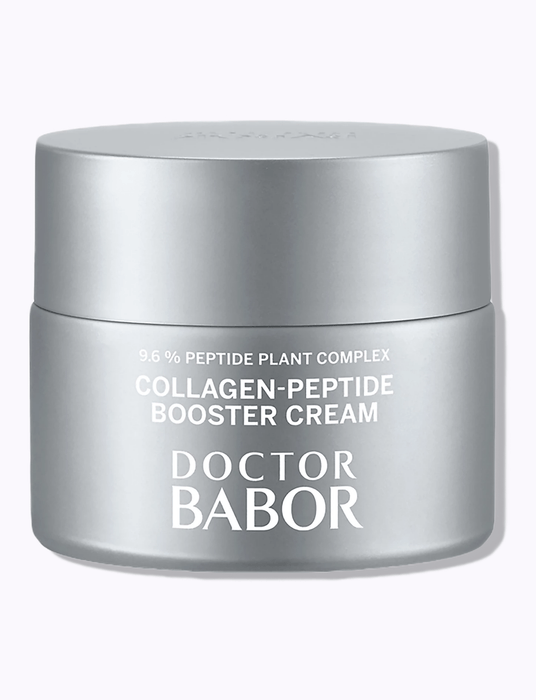
DOCTOR BABOR Collagen-Peptide Booster Cream — Layers several peptides (including palmitoyl tripeptide-5 and tripeptide-1) with sodium hyaluronate, squalane and panthenol. Fragrance-free and silicone-free, per the brand.
Deal at DermStreet: 30% off with code SPOOKY30
A peptide eye gel
-
Dermalogica Awaken Peptide Eye Gel — A cooling gel with palmitoyl tetrapeptide-7 and caffeine to help the look of morning puffiness and tired eyes. Light enough to wear under concealer.
Deal at DermStreet: 20% off with code SPOOKY20
How to add peptides to your routine
Peptides are easygoing. Apply serums to clean skin before moisturizer, and use a peptide cream as your moisturizer step.
Morning: gentle cleanser → peptide serum → moisturizer → broad-spectrum SPF 30+ (non-negotiable — sunscreen protects the results you are working for).
Evening: cleanser → retinoid (if you use one) or peptide serum → peptide or barrier moisturizer → eye gel or cream.
One pairing note: copper peptides can be destabilized by low-pH products such as glycolic acid or L-ascorbic acid vitamin C, so use them at different times of day. Most other peptides layer comfortably with niacinamide, hyaluronic acid and retinoids. Give any new routine 8 to 12 weeks before judging results.
Frequently Asked Questions
What do peptides do for your skin?
Peptides are amino-acid messengers that, depending on the type, help support the look of firmness, soften the appearance of expression lines and keep skin hydrated. They are gentle and work best alongside sunscreen and a retinoid.
Are peptides better than retinol?
No. Retinoids and daily sunscreen have the strongest evidence for visible signs of aging. Peptides are lower-irritation and pair well with retinol — many people use a peptide in the morning and a retinoid at night.
Do peptide serums work like Botox?
No. Argireline-type peptides have small studies showing surface smoothing, but no human trial has shown muscle relaxation comparable to injected botulinum toxin.
Can I use peptides with vitamin C?
Most peptides layer well with vitamin C. Copper peptides are the exception: low-pH products like L-ascorbic acid or glycolic acid can destabilize them, so use those at different times of day.
Are peptides safe during pregnancy?
Peptides are generally well tolerated, but there are no pregnancy-specific safety studies. Check with your obstetric provider before starting new actives.
Where can I buy peptide serums and creams?
DermStreet.com carries authentic, physician-grade peptide skincare, and its licensed estheticians can help you choose. Current deals: StriVectin 35% off with code SPOOKY35, PCA Skin 27% off with code SPOOKY27, Peter Thomas Roth and BABOR 30% off with code SPOOKY30, and Dermalogica 20% off with code SPOOKY20.
The Bottom Line
Peptides will not replace your sunscreen or your retinoid, but they are one of the kindest ways to add bounce, hydration and a smoother-looking finish to any routine — especially for sensitive skin. Choose a well-formulated serum or cream, use it consistently and judge results after a couple of months. Shop the peptide edit at DermStreet now, where StriVectin is 35% off with SPOOKY35, PCA Skin 27% off with SPOOKY27, Peter Thomas Roth and BABOR 30% off with SPOOKY30, and Dermalogica 20% off with SPOOKY20.
Our licensed estheticians at DermStreet can help — call 888-249-2502 or start a live chat.
Shop The Blog



Sources
Acıbadem International — Peptides in Skincare: What Signal Peptides Do and What the Studies Show
Trendalytics — Skincare Trends 2026: Ingredients Driving Consumer Demand
This article is for educational purposes and is not medical advice.