


Last reviewed November 10, 2026 · 8-minute read
The short answer: Mineral sunscreens use zinc oxide and/or titanium dioxide; chemical sunscreens use organic filters such as avobenzone, homosalate, octisalate and octocrylene; hybrids combine both. The FDA's September 2026 order removed two old filters, PABA and trolamine salicylate, that no U.S. sunscreen currently uses, so you don't need to change anything. Choose mineral for sensitive skin, and whichever broad-spectrum SPF 30+ you'll actually wear daily.
Sunscreen has had a newsworthy year. In June the FDA added bemotrizinol, the first new sunscreen active in more than two decades. Then, on September 10, 2026, the agency issued a final order taking two filters off the list entirely. If you saw the headlines and wondered whether the tube in your bag is suddenly suspect, you are not alone, and the honest answer is reassuring.
The bigger question most people are really asking is the old one: mineral or chemical? We read the FDA's own Q&A and the American Academy of Dermatology's label guidance, then tested the lineup at DermStreet to sort out which formulas suit which skin, especially now, when winter dryness and indoor heat make texture matter as much as protection.
What did the FDA just change about sunscreen?
✔ Two ingredients are out: the FDA's final order removes aminobenzoic acid (PABA) and trolamine salicylate from the over-the-counter sunscreen monograph, stating that their risks outweigh their benefits
✔ Nothing on shelves is affected: the FDA says it is not aware of any sunscreen sold in the U.S. that contains either ingredient, and that consumers do not need to take any action
✔ The timeline: the order takes effect September 11, 2027, after which those two filters could only be used through a full new drug application
✔ A new one is in: bemotrizinol (BEMT) joined the monograph in June 2026. Read our bemotrizinol explainer for what that filter does
Industry coverage notes the monograph now covers 15 active ingredients. Of those, the FDA has proposed that zinc oxide and titanium dioxide are generally recognized as safe and effective. For twelve chemical filters, including avobenzone, homosalate, octisalate, octocrylene and oxybenzone, the agency says it needs more data, and it states plainly that this request is not a conclusion that those ingredients are unsafe.
What is the difference between mineral and chemical sunscreen?
The AAD's rule of thumb is simple: flip the bottle to the Drug Facts box. If the active ingredients are titanium dioxide, zinc oxide or both, it is a physical, or mineral, sunscreen. If it contains neither, it is chemical. If it lists both kinds, it is a hybrid. All three types form a layer on the skin that absorbs UV rays before they do damage.
| Mineral | Chemical | Hybrid | |
|---|---|---|---|
| Active ingredients | Zinc oxide, titanium dioxide | Avobenzone, homosalate, octisalate, octocrylene and others | One or both minerals plus a chemical filter |
| FDA status | Proposed as generally recognized as safe and effective | FDA has asked for more data (not a finding that they are unsafe) | Depends on the filters used |
| Feel and finish | Often matte; tinted versions help avoid a white cast | Usually sheer and invisible, easy under makeup | Lightweight, often designed for acne-prone skin |
| Best for | Sensitive, reactive or post-procedure skin; children over 6 months | Anyone who hates residue and wants a primer-like base | Oily, combination and breakout-prone skin |
Is mineral sunscreen better than chemical sunscreen?
Not universally. The AAD says any sunscreen is a good choice if it offers broad-spectrum protection, SPF 30 or higher and water resistance, and that the best sunscreen is the one you will use every day. Where the two types genuinely differ is comfort and tolerance.
✔ Sensitive skin: dermatologists recommend mineral sunscreen for people with sensitive skin, according to the AAD
✔ Children: the AAD advises keeping babies under 6 months out of the sun and avoiding sunscreen on them if possible; from 6 months, zinc oxide and titanium dioxide are less likely to irritate
✔ Darker skin tones and dark spots: tinted sunscreens containing iron oxides help protect against visible light, which can cause dark spots on darker skin tones
✔ Invisible wear: modern chemical gels like Supergoop! Unseen dry clear on every skin tone, which is why many people reach for them daily
One more number worth knowing: SPF 30 filters about 97% of UVB rays, versus about 93% for SPF 15, which is why SPF 30 is the dermatologist floor.
Who should pick which type?
Choose mineral if your skin stings easily, you have redness-prone skin, you are recovering from a peel or laser, or you are shopping for a child over 6 months.
Choose chemical if you want zero cast, a primer-smooth base under makeup, or a dewy, tinted glow.
Choose a hybrid if you are acne-prone and want a sheer, oil-free feel with some zinc oxide in the mix.
Pregnant? The FDA encourages anyone concerned about sunscreen use during pregnancy, or on infants and children, to talk with their health care professional.
The Best Mineral, Chemical and Hybrid Sunscreens at DermStreet
Deals current as of November 10, 2026. DermStreet discounts vary by brand, take one code per item, and may change.
Best mineral sunscreens
-
EltaMD UV Physical Broad-Spectrum SPF 41 — 9% zinc oxide and 7% titanium dioxide in a silky, tinted formula with a matte finish that helps even out redness. Shoppers with sensitive skin say it blends without a white cast.
Deal at DermStreet: 25% off with code HOLIDAY25 -
TiZO 2 Facial Mineral Sunscreen and Primer Non-Tinted SPF 40 — Titanium dioxide and zinc oxide with vitamins C and E in a lightweight, non-comedogenic primer texture suited to sensitive and post-procedure skin. Reviewers love it as a smoothing base under makeup.
Deal at DermStreet: 30% off with code HOLIDAY30 -
SkinMedica Essential Defense Mineral Shield Broad Spectrum SPF 35 — Zinc oxide and titanium dioxide with antioxidants in a light, non-greasy cream that won't clog pores. Reviewers call it gentle and residue-free.
Deal at DermStreet: 25% off with code HOLIDAY25 -
Colorescience Sunforgettable Total Protection Brush-On Shield SPF 50 — An all-mineral powder (22.5% each of zinc oxide and titanium dioxide) in a built-in brush, water- and sweat-resistant for up to 80 minutes. The easiest way to reapply over makeup at your desk.
Deal at DermStreet: 30% off with code HOLIDAY30
Best chemical sunscreens
-
Supergoop! Unseen Sunscreen SPF 50 — Avobenzone, homosalate, octisalate and octocrylene in a scentless, oil-free gel that dries completely clear and doubles as a primer. Reviewers praise the velvety finish and no white cast.
Deal at DermStreet: 20% off with code HOLIDAY20 -
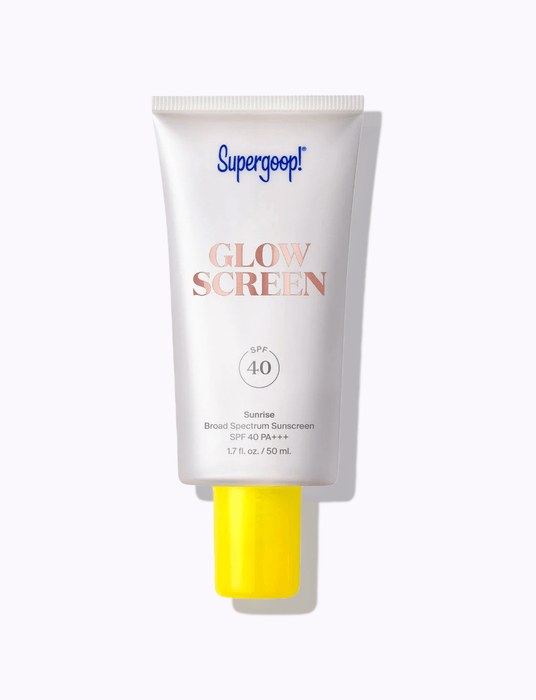
Supergoop! Glowscreen SPF 40 — A sheer, tinted, fragrance-free sunscreen-primer with hyaluronic acid, niacinamide and vitamin B5 plus light-reflecting pearls for a dewy, lit-from-within look. A natural pick for dry winter skin.
Deal at DermStreet: 20% off with code HOLIDAY20
Best hybrid sunscreen
-
EltaMD UV Clear Broad-Spectrum SPF 46 — 9% zinc oxide plus 7.5% octinoxate with niacinamide and hyaluronic acid, oil-free and fragrance-free for acne-prone and sensitive skin. Reviewers say it sits well under makeup without breakouts. Compare it to its siblings in our EltaMD sunscreen guide.
Deal at DermStreet: 25% off with code HOLIDAY25
How to add sunscreen to your winter routine
Morning: gentle cleanse → antioxidant serum (see our vitamin C guide) → moisturizer → broad-spectrum SPF 30+ as the last skincare step, applied generously to face, neck and any exposed skin. A tinted mineral or a glowy chemical formula can stand in for foundation.
Midday: reapply when you are outdoors for long stretches or after sweating; a brush-on mineral powder makes this easy over makeup.
Evening: cleanse thoroughly to remove sunscreen, then follow with your treatment and moisturizer. Dry or reactive? Browse picks for sensitive skin and dry skin.
Patch-test any new sunscreen on your jawline for a few days if you have sensitive skin, and stop using any product that causes a rash or stinging.
Frequently Asked Questions
Do I need to throw out my sunscreen after the FDA's PABA ruling?
No. The FDA says it is not aware of any sunscreen sold in the U.S. that contains PABA or trolamine salicylate, and that consumers do not need to take any action.
How can I tell if my sunscreen is mineral or chemical?
Check the active ingredients in the Drug Facts box. Zinc oxide and/or titanium dioxide only means mineral; neither means chemical; a mix means hybrid.
Are chemical sunscreens unsafe?
The FDA has asked manufacturers for more data on twelve chemical filters, but it states that this is not a conclusion that they are unsafe. The AAD continues to recommend any broad-spectrum, water-resistant SPF 30+ you will wear consistently.
Which sunscreen is best for sensitive skin?
Dermatologists recommend mineral sunscreens with zinc oxide or titanium dioxide for sensitive skin, according to the AAD. Fragrance-free formulas are also a smart choice.
Do I need sunscreen in winter?
Yes. The FDA notes that sun safety is important for everyone and all skin tones, and that need doesn't take the season off. A daily broad-spectrum SPF 30+ helps protect against sunburn, dark spots and visible signs of aging year-round.
Where can I buy mineral and chemical sunscreen?
DermStreet.com carries authentic physician-grade mineral, chemical and hybrid sunscreens from EltaMD, TiZO, SkinMedica, Colorescience and Supergoop!, and licensed estheticians can help you choose. Current deals: 25% off EltaMD and SkinMedica with code HOLIDAY25, 30% off TiZO and Colorescience with code HOLIDAY30, and 20% off Supergoop! with code HOLIDAY20.
The Bottom Line
The FDA's latest order is housekeeping, not a recall: the filters it removed are not in any U.S. sunscreen. Choose mineral if your skin is sensitive, chemical if you want an invisible finish, and a hybrid if you are breakout-prone, but above all choose a broad-spectrum SPF 30+ you love enough to wear daily. Stock up at DermStreet, where this week's brand codes take 20% to 30% off.
Our licensed estheticians at DermStreet can help — call 888-249-2502 or start a live chat.
Shop The Blog



Sources
U.S. FDA: Questions and Answers: FDA's regulatory actions on over-the-counter sunscreen
Personal Care Insights: US FDA eliminates outdated UV filters as regulatory modernization continues
American Academy of Dermatology: How to decode a sunscreen label
American Academy of Dermatology: Sunscreen FAQs
This article is for educational purposes and is not medical advice.